
Residue in the backing and drainage path
Urine that drains through the turf can collect in the backing, base, or drainage layer. Surface cleaning does not reach it, so odor returns even after the top looks clean.
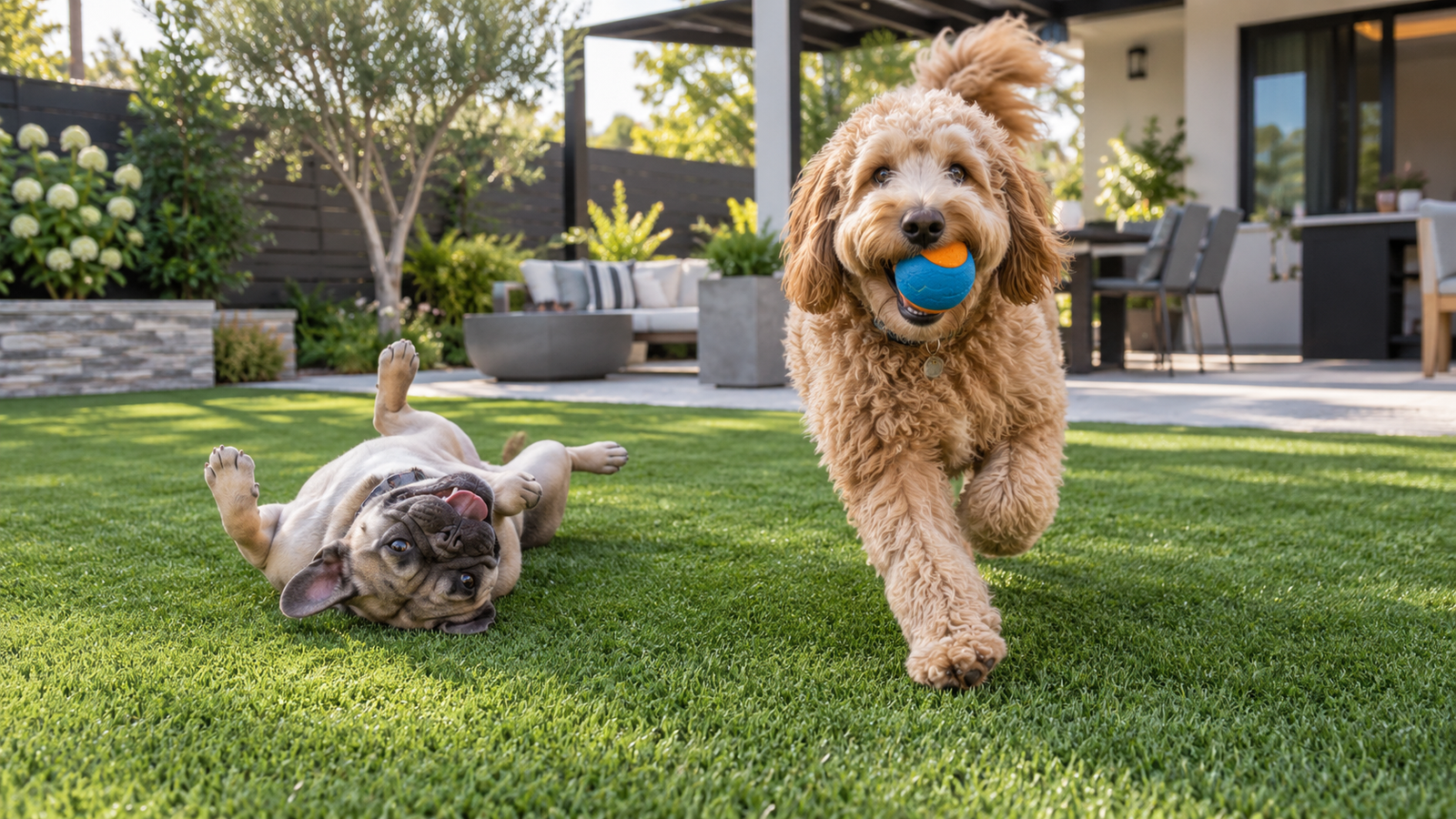
Pet Turf & Odor
A focused answer on why pet turf smells, why surface deodorizer alone often does not last, and what a real odor plan has to address.
Dog urine smell in artificial turf is rarely a surface problem. Urine passes through the blades and infill and into the backing and drainage path, where residue builds up over time. The smell you notice is that trapped residue breaking down — not something sitting on top of the grass.
A deodorizing infill or spray can reduce odor temporarily, but it does not remove the residue that causes it. Lasting improvement usually requires removing or treating the contamination in the fibers, infill, backing and drainage path — and fixing any drainage that traps urine underneath the surface.
No responsible company should guarantee zero odor. The honest goal is a real reduction through proper installation, recurring enzyme-based maintenance, and drainage that actually moves liquid out from under the turf.
On this page
Understanding the driver helps choose cleaning, repair, maintenance — or a larger scope conversation.
Urine that drains through the turf can collect in the backing, base, or drainage layer. Surface cleaning does not reach it, so odor returns even after the top looks clean.
Infill that has packed down or absorbed too much organic material holds odor close to the surface and limits drainage.
If water and urine cannot exit the system, they sit under the turf and feed odor continuously, no matter how often the surface is treated.
Many dogs using a small turf, or one favorite spot, overload the system faster than routine cleaning can keep up with.
Photos help triage. Some conditions only show after walking the surface, checking drainage, and lifting a corner when appropriate.
01
A pet-area assessment looks at where odor is strongest, infill condition, and whether contamination has moved past the surface.
02
Checking slope, drains and whether liquid ponds under or at the edge of the turf helps identify whether odor is a drainage problem as much as a cleaning problem.
03
A cleaning estimate reflects turf size, pet count, contamination level and whether infill refresh or deeper treatment is appropriate.
Straight talk about what a repair, cleaning, or documentation can and cannot deliver.
Zero odor cannot be guaranteed. Proper installation and recurring enzyme-based maintenance reduce odor risk, but persistent odor may require deeper treatment or infill/base remediation.
Deodorizing infill supports an odor-management plan but does not replace waste removal, drainage and cleaning.
A fixed cleaning frequency cannot be recommended without knowing pet count, turf size and use intensity.
Send wide and close-up photos, or book a visit. Cleaning, odor treatment, and repairs are evaluated separately and approved before work begins.