
Wear-layer or shock-layer loss
Thinning, cracking, or separating layers reduce the system’s ability to absorb impact.
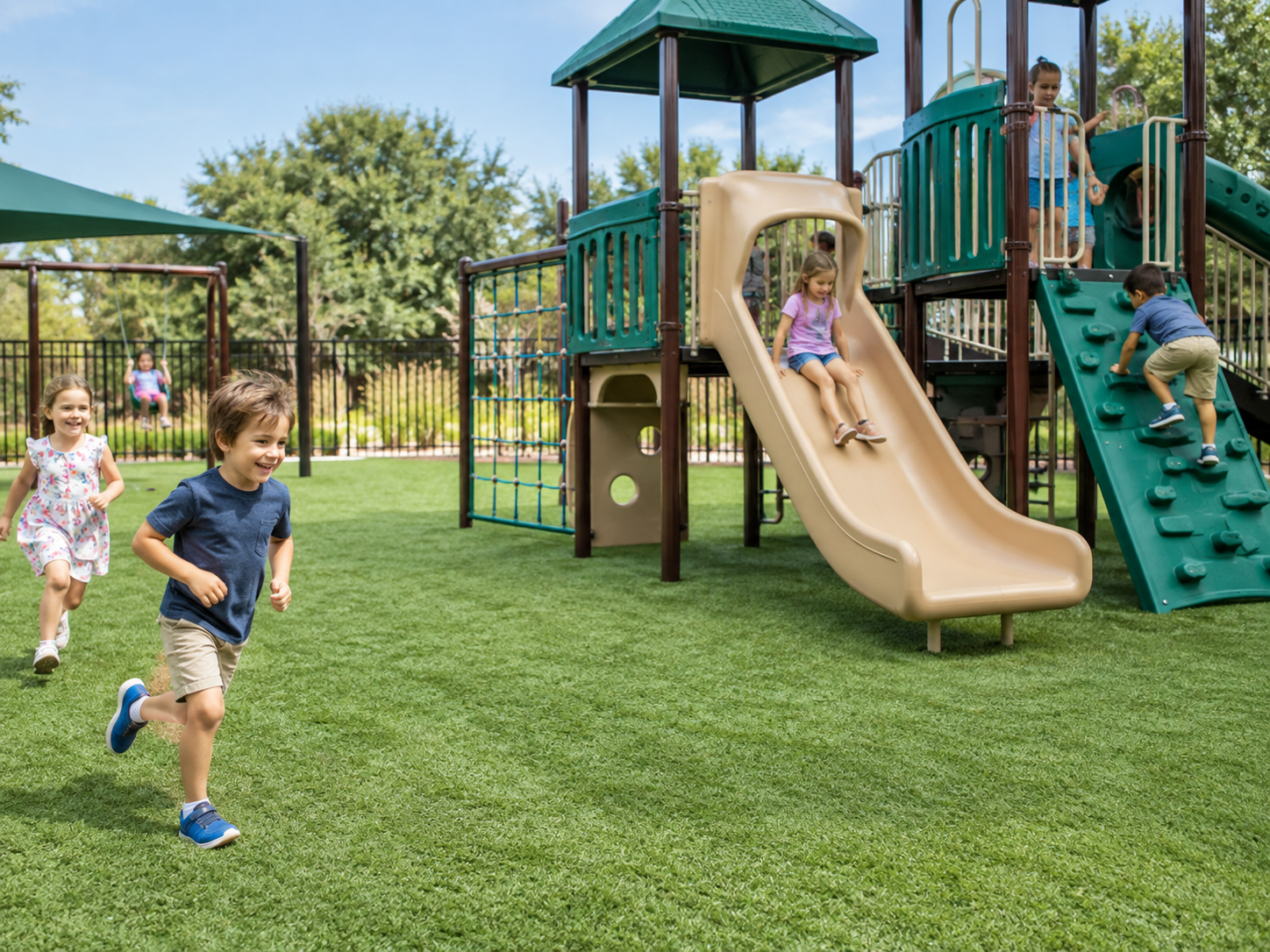
Playground Surfaces
A focused answer on critical fall height, why the whole surface system determines it, and the honest limits of what SynTurf does.
Critical fall height is the maximum height from which a fall onto a surface is expected to be within acceptable impact limits. It is a property of the entire surface system — the wear layer, the shock layer or shock pad, the base and drainage underneath — not of the top surface alone. A playground surface is engineered layers, not just green turf or colored rubber.
SynTurf does not perform in-house impact testing, calculate critical fall height, or certify compliance. What we do is maintain and document the surface system, record equipment fall-height information, and coordinate qualified third-party ASTM impact testing when an owner requests it.
For owners, the practical point is this: a surface that has lost infill, separated layers, cracked rubber, or a degraded shock layer may no longer perform the way it was designed to. Documenting condition over time is how you know when to test, repair, or plan replacement.
On this page
Understanding the driver helps choose cleaning, repair, maintenance — or a larger scope conversation.
Thinning, cracking, or separating layers reduce the system’s ability to absorb impact.
Displaced or compacted infill in turf systems changes the cushioning the system was designed to provide.
Settling, washout, or ponding under the surface can affect how the whole system performs.
High-traffic playgrounds age faster; the system that met a fall-height target when new may not after years of use.
Photos help triage. Some conditions only show after walking the surface, checking drainage, and lifting a corner when appropriate.
01
A playground assessment evaluates and documents the whole system — wear layer, shock layer, base and drainage — as a single safety system.
02
We record equipment fall-height information alongside surface condition so the owner knows what the surface is expected to support.
03
When an owner wants verified impact performance, we coordinate qualified third-party ASTM impact testing — we do not perform or certify it ourselves.
Straight talk about what a repair, cleaning, or documentation can and cannot deliver.
SynTurf does not perform in-house ASTM impact testing, calculate critical fall height, or certify safety compliance.
Documentation of condition is not a certification that a surface meets any specific fall-height standard.
Fall-height performance depends on the complete installed system and its current condition, which can only be verified by qualified testing.
Send wide and close-up photos, or book a visit. Cleaning, odor treatment, and repairs are evaluated separately and approved before work begins.