
Infill loss or compaction
Insufficient or compacted infill reduces cushioning and can raise surface hardness over time.
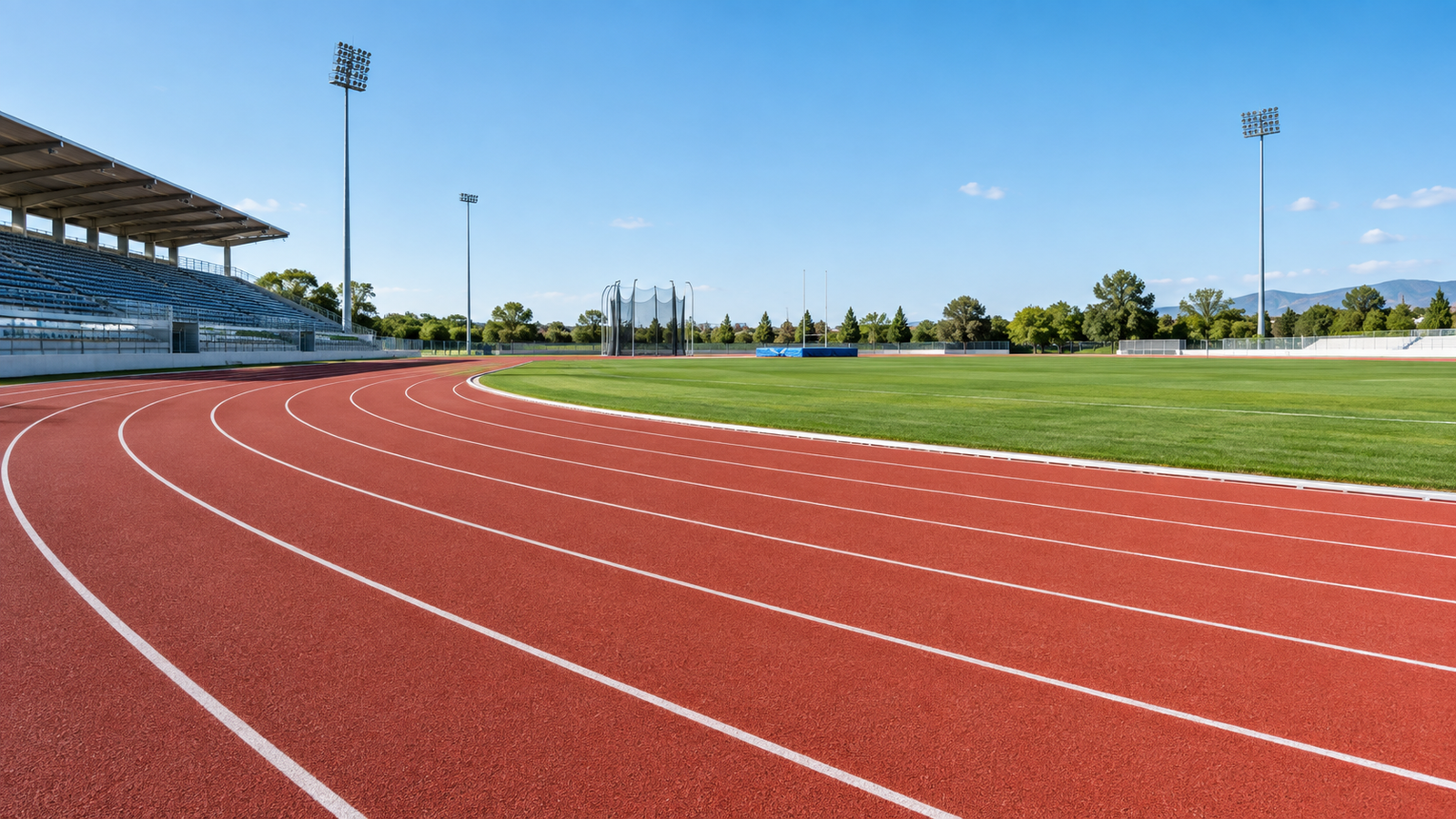
Sports Fields
A focused answer on GMAX, why a maintenance record matters for performance, and the honest limits of what SynTurf does.
GMAX is a measure of surface hardness used to evaluate impact attenuation on sports fields — how much force a falling object absorbs when it hits the surface. Higher GMAX means a harder surface and less impact absorption. It is one factor owners and testing authorities use to assess whether a field is within acceptable performance range for play.
SynTurf does not perform in-house GMAX testing or certify field compliance. What we do is maintain the field, document its condition, measure infill depth, track wear and repairs, and coordinate qualified third-party performance testing when an owner requests it. A documented maintenance record also helps an owner show that the field has been cared for between tests.
Maintenance affects performance: infill depth, compaction, contamination, seam and inlay condition, and drainage all influence how a field plays and how it tests. That is why every SynTurf sports-field program can include field mapping, infill measurements, maintenance history, repair tracking, testing coordination and lifecycle budget planning through the SynTurf Field Passport.
On this page
Understanding the driver helps choose cleaning, repair, maintenance — or a larger scope conversation.
Insufficient or compacted infill reduces cushioning and can raise surface hardness over time.
Debris, sediment, or organic material in the infill changes how the field absorbs impact and drains.
Failed seams, lifted inlays, or perimeter problems create play and safety hazards independent of GMAX.
High-use areas such as goalmouths wear faster and may test differently than the rest of the field.
Photos help triage. Some conditions only show after walking the surface, checking drainage, and lifting a corner when appropriate.
01
A baseline includes mapped infill-depth readings, high-use areas, seam/inlay/perimeter map, drainage, fiber condition, field age and maintenance history.
02
Scheduled visits cover grooming, decompaction, brushing, extraction, infill redistribution and measured top dressing as the field needs.
03
We coordinate qualified third-party performance testing and maintain a Field Passport documenting condition, repairs, infill history and lifecycle planning.
Straight talk about what a repair, cleaning, or documentation can and cannot deliver.
SynTurf does not perform in-house GMAX or performance testing and does not certify field compliance with any standard.
GMAX and performance results can only be verified by qualified third-party testing.
A maintenance record documents care; it does not guarantee any specific test result.
Send wide and close-up photos, or book a visit. Cleaning, odor treatment, and repairs are evaluated separately and approved before work begins.