Pet turf & odor treatment
Pet Turf Cleaning & Odor Treatment
Pet odor does not live on the fibers. It lives in the infill and against the backing — which is exactly where we treat it.
Where Pet Odor Actually Lives
Understanding the layers explains why surface products stop working after a few days.
Fiber layer
What you see and rinse. Very little odor is held here.
Infill layer
Residue binds to infill particles and stays through rinsing.
Backing layer
Saturated backing releases odor whenever it warms up.
Heat & humidity
Houston conditions reactivate residue and amplify the smell.

Want the full breakdown? Explore our guide to where pet odor actually lives — seven odor locations inside and around a turf system, each with its own evaluation and treatment.
Why Rinsing With a Garden Hose Does Not Solve Pet Turf Odor
A hose is the first thing every pet owner reaches for. Here is why the smell keeps coming back.
Water dilutes — it does not break down urine
A garden hose rinses the visible fiber surface and dilutes what is on top, but it does not chemically break down the uric acid, urea, and ammonia compounds that cause pet turf odor. The residue is still there, just spread around.
It pushes contamination deeper
Flooding the surface drives urine residue and organic material down into the infill and against the backing — exactly where odor is stored. More water in a poorly draining yard can make the subsurface problem worse, not better.
Bacteria and organic buildup remain
Rinsing does not remove the bacteria, biofilm, and organic buildup that collect in compacted infill over months of pet use. These continue to feed odor every time the turf warms up.
Compacted infill blocks water flow
When infill is compacted and matted, water sheets across the surface instead of moving through it. The contamination below the crust never gets touched by the rinse at all.
No agitation, no extraction
A hose has no mechanical action. It cannot lift matted fibers, open compacted infill, or extract saturated material. What it leaves behind is the part that smells.
Heat and humidity reactivate it
Within a day or two of rinsing, Houston heat and humidity warm the backing and infill, and the trapped residue releases odor again. This is why the smell "comes back" — it never actually left.
The short version: a garden hose manages the surface, but pet turf odor is a subsurface problem. Until the infill is opened and the contamination against the backing is treated or removed, rinsing will keep giving you a day or two of relief followed by the same smell — especially in Houston heat and humidity. That is why professional pet turf cleaning combines infill decompaction, enzyme odor treatment, and controlled extraction or replacement instead of just flooding the surface.
Infill Compaction: The Hidden Cause of Pet Turf Odor
Compacted infill is usually what turns a manageable pet yard into a persistent odor problem.
Drainage slows or stalls
Compacted infill forms a dense crust that resists water movement. Instead of draining through, urine and rinse water pond on the surface or run off, leaving contamination sitting against the backing.
Odor is trapped and concentrated
Tight, packed infill holds urine residue, ammonia, and organic material in place where it cannot rinse out or dry out. The infill effectively becomes a storage layer for the compounds that smell.
Turf performance drops
Matted, compacted fibers lose their upright memory and lay flat. The surface gets hard underfoot, loses its cushion, and looks worn long before the fiber itself is actually worn out.
Pet use accelerates the cycle
Dogs prefer a consistent spot. Repeated use in the same zone compacts the infill faster, saturates it with residue, and turns a small area into the dominant odor source for the whole yard.
Surface condition deteriorates
A compacted, contaminated surface collects debris, holds moisture, and develops a visible dark or matted patch. It looks dirty even right after rinsing because the problem is below the fibers.
How we decompact pet turf infill
Decompaction is the mechanical step that opens the infill crust so drainage can recover and enzyme treatment can reach the contamination. We agitate the infill to break up the packed layer, lift matted fibers, and restore airflow through the surface — then treat, not the other way around.
- Break up the compacted infill crust in pet-use zones
- Lift matted fibers and restore upright memory
- Restore drainage path through the infill layer
- Open the surface so enzyme treatment reaches the source
- Remove loosened organic buildup before treatment
Decompaction is included as part of a pet odor treatment visit where needed. Heavily saturated infill that cannot be recovered is quoted for replacement in the affected zone after inspection.
How Professional Enzyme Treatments Work on Pet Turf
Enzyme odor treatment is the core of pet urine odor removal — when it is applied where the odor actually lives.
Applied at the infill level
Enzyme treatment is delivered into the infill and against the backing — where pet urine odor actually lives — not just misted across the top of the fibers. Getting it to the source is what makes it effective.
Targets the odor-causing compounds
Enzyme products are formulated to break down the organic residue and uric compounds associated with pet urine, rather than masking the smell with a fragrance that fades in a day.
Correct dilution and dwell time
Enzymes need the right concentration and enough contact time to work. We apply at label dilution and allow dwell time before rinsing, so the product can act on the residue instead of being washed away immediately.
Agitation first, treatment second
Where infill is compacted, we decompact before treatment so the enzyme can actually reach the contamination. Treating over a sealed crust would leave the source untouched.
Realistic expectations
A single treatment removes most surface odor in most yards. Where contamination has reached the base or the backing is saturated, treatment reduces odor but may not fully eliminate it — and we tell you that before we start, not after.
When replacement is the better answer
If infill is saturated beyond what enzyme treatment can recover, replacing the infill in the affected zone is the durable fix. We quote that separately after inspection rather than charging for a treatment we know will underperform.
Enzyme treatment is not a magic spray. It is a process: locate the source, open the infill, apply at the right dilution, give it dwell time, then rinse and groom. Done correctly it is the most effective tool we have for synthetic turf urine odor treatment. Done as a surface mist over compacted infill, it does almost nothing — which is why we pair it with decompaction every time.
Our Pet Odor Treatment Process
01
Inspect & locate
Identify the areas pets actually use and where contamination has concentrated.
02
Remove waste & debris
Solid waste, hair and organic material removed before treatment.
03
Decompact infill
Agitation opens compacted infill so treatment can reach the contamination.
04
Enzyme treatment
Applied at the correct dilution and given dwell time to break down residue.
05
Extract or replace
Where infill is saturated, we extract or replace it in the affected zone.
06
Rinse, groom & report
Controlled rinse, fiber reset and photos with a recommended frequency.
30-Day Odor Return Guarantee
If pet odor returns within 30 days of a completed odor treatment, we come back and re-treat the affected area once at no charge. The guarantee covers odor returning from the same contamination we treated — not new pet use, new spills, or contamination that had already reached the backing or base before service. We tell you up front when a single treatment will reduce but not eliminate the problem.
Read the full guarantee termsSurface & Subsurface Odor, Drainage, and Turf Health
Pet turf odor is rarely one problem. It is a combination of contamination, compaction, drainage, and buildup.
Surface odor sources
Loose waste, hair, and residue on the fibers produce immediate smell and are the easiest to manage between visits. Prompt solid-waste removal and light surface rinsing keep the visible layer under control.
Subsurface odor sources
The persistent smell lives in the infill and against the backing — uric compounds, ammonia, and organic residue that rinsing cannot reach. This is what enzyme treatment and infill decompaction are built to address.
Drainage evaluation
If water ponds or sheets off instead of moving through the turf, contamination sits against the backing and treatment will not hold. We evaluate drainage on every pet turf inspection and flag it honestly.
Organic buildup & biofilm
Over months of pet use, organic material and biofilm collect in the infill and feed odor. Sanitation-oriented cleaning removes that buildup so the surface stays cleaner longer between treatments.
Deodorizing & sanitation-oriented cleaning
Deodorizing targets the odor compounds; sanitation-oriented cleaning addresses the bacteria and organic load. For pet turf we do both in the same visit because they share the same source.
Infill care & grooming
Keeping infill at the right depth, fibers upright, and the surface groomed extends the life of the turf and helps treatment hold. Grooming is part of every visit, not an add-on.
Pet-Heavy Areas: Dog Runs, Dog Parks, Kennels & Daycare
The heavier and more concentrated the pet use, the more important recurring treatment and infill care become.
Backyard dog turf & dog runs
Residential pet yards and dedicated dog runs where one or more dogs use the same turf daily. These are the most common odor sources we treat, and the most responsive to enzyme treatment plus a recurring plan.
Apartment pet relief areas
Communal pet relief stations at multifamily properties see heavy, concentrated use from many dogs. These need documented recurring service, drainage evaluation, and infill management on a schedule.
Dog parks & bark parks
Public and HOA dog parks carry high traffic, organic load, and odor across large areas. We scope these as commercial work with recurring maintenance and reporting.
Kennels, boarding & daycare
Pet boarding, daycare, and veterinary facilities run the heaviest contamination load of any turf we see. These require frequent recurring treatment, infill care, and sanitation-oriented cleaning.
Important Evaluation Items Before We Treat
A real pet odor plan starts with knowing what is actually going on under the surface.
Where pets actually concentrate use, and which zones are the real odor source
Infill depth, compaction level, and whether the infill is recoverable or saturated
Drainage behavior — whether water moves through the turf or ponds and runs off
Backing condition and whether contamination has reached the base layer
Fiber matting, fiber memory, and whether grooming will reset the surface
Shade, airflow, and humidity pockets that hold odor between visits
Number and size of dogs, yard size, and how the space is used day to day
Visible organic buildup, biofilm, and debris trapped in the infill
What Sets Our Pet Turf Care Apart
The steps most services skip are the steps that actually control pet turf odor.
We find the source first
Most pet odor is concentrated in one or two zones, not the whole yard. We locate those zones before treating so we are not charging you to treat clean turf.
Decompaction before treatment
Opening compacted infill is the step that lets enzyme treatment actually reach the contamination. Skipping it is why hose rinsing and spray-only services fail.
Enzyme at the infill level
Applied into the infill and against the backing at correct dilution with real dwell time — not a surface mist that looks thorough but never reaches the source.
Honest about when to replace
When infill is saturated beyond recovery, we tell you and quote replacement in the affected zone instead of selling a treatment that will not hold.
Recurring plan built to your yard
Frequency is based on your dog count, yard size, shade, and drainage — not a one-size schedule. The goal is odor that stays gone, not a single reset.
Photo-documented every visit
Before and after photos on every service so you can see what was done and track how the turf is holding up between visits.
A Recurring Plan Built to Your Yard
One treatment resets the turf. A recurring plan keeps the odor from coming back.
Monthly
For active yards with multiple dogs, heavy use, or shaded areas that hold moisture. Keeps infill managed and odor controlled before it returns.
Every other month
The sweet spot for most single-dog backyards with decent drainage and sun. Maintains the surface and treats the infill before buildup compounds.
Quarterly
For lighter-use pet turf, smaller dogs, or yards with good drainage and airflow. A seasonal reset plus inspection and grooming.
We recommend a frequency after the first visit based on what we actually find — dog count, yard size, shade, drainage, and how concentrated the pet use is. There are no contracts; you can adjust or pause recurring service anytime.
Residential & Commercial Pet Areas
Related Turf Care Services
Pet odor treatment is usually one part of a fuller turf care plan.
Recent turf care visits.
A quick look at cleanings, repairs and restorations we’ve completed across Greater Houston.
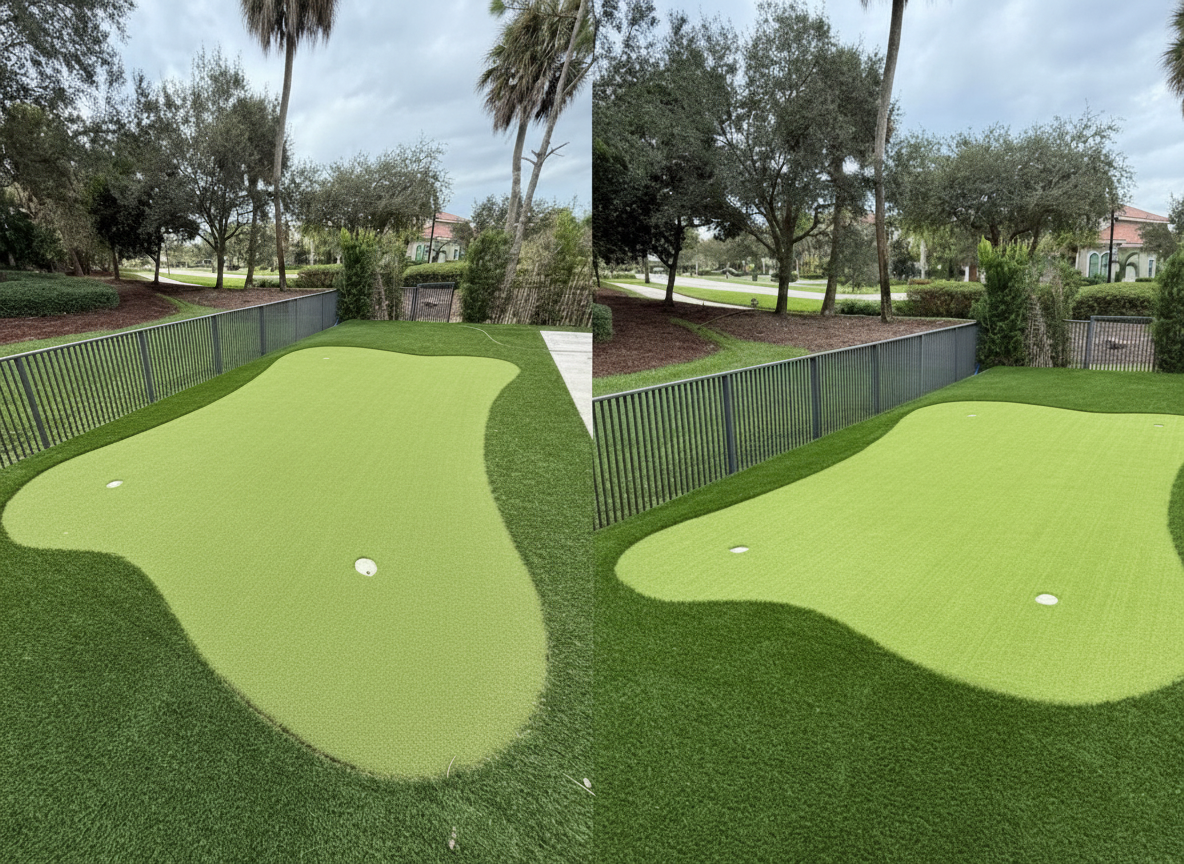 Backyard install — Heights
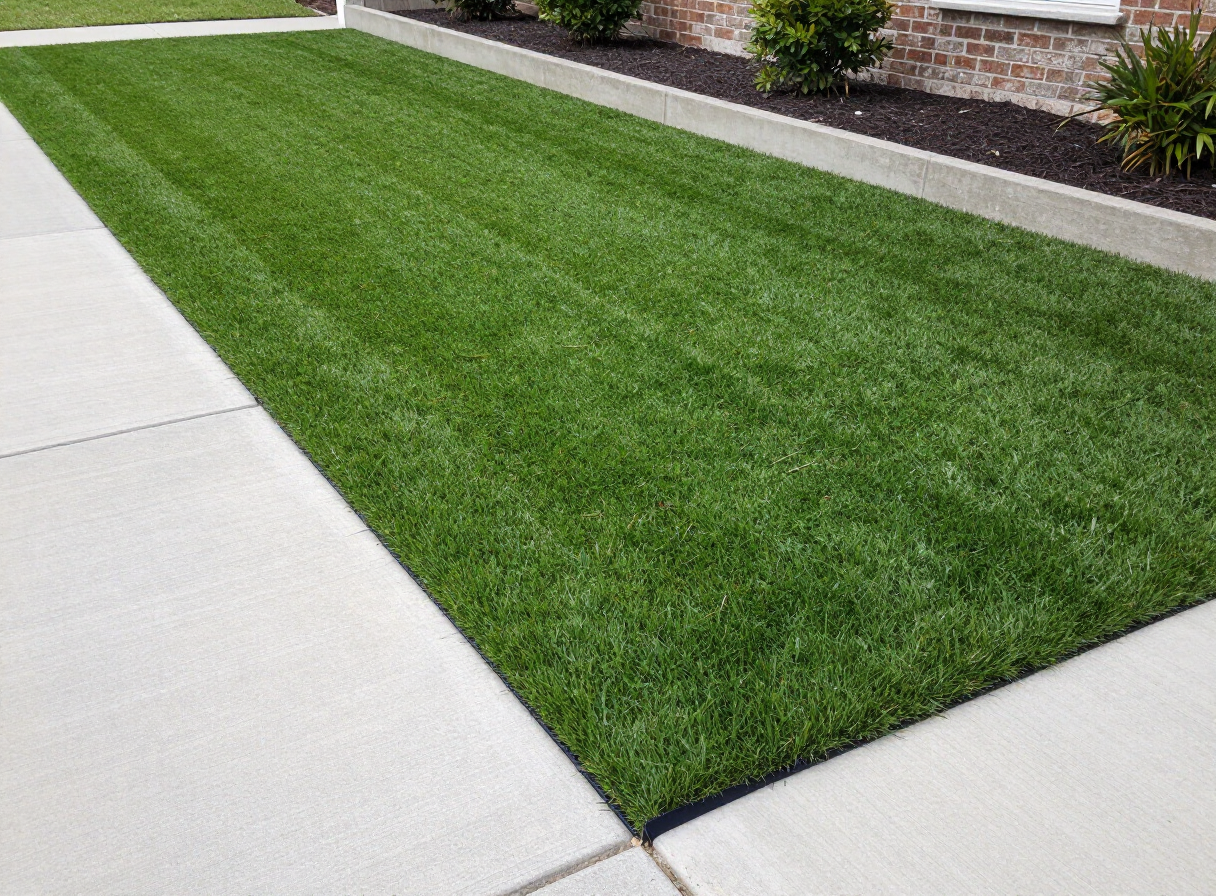 Townhome courtyard — Katy
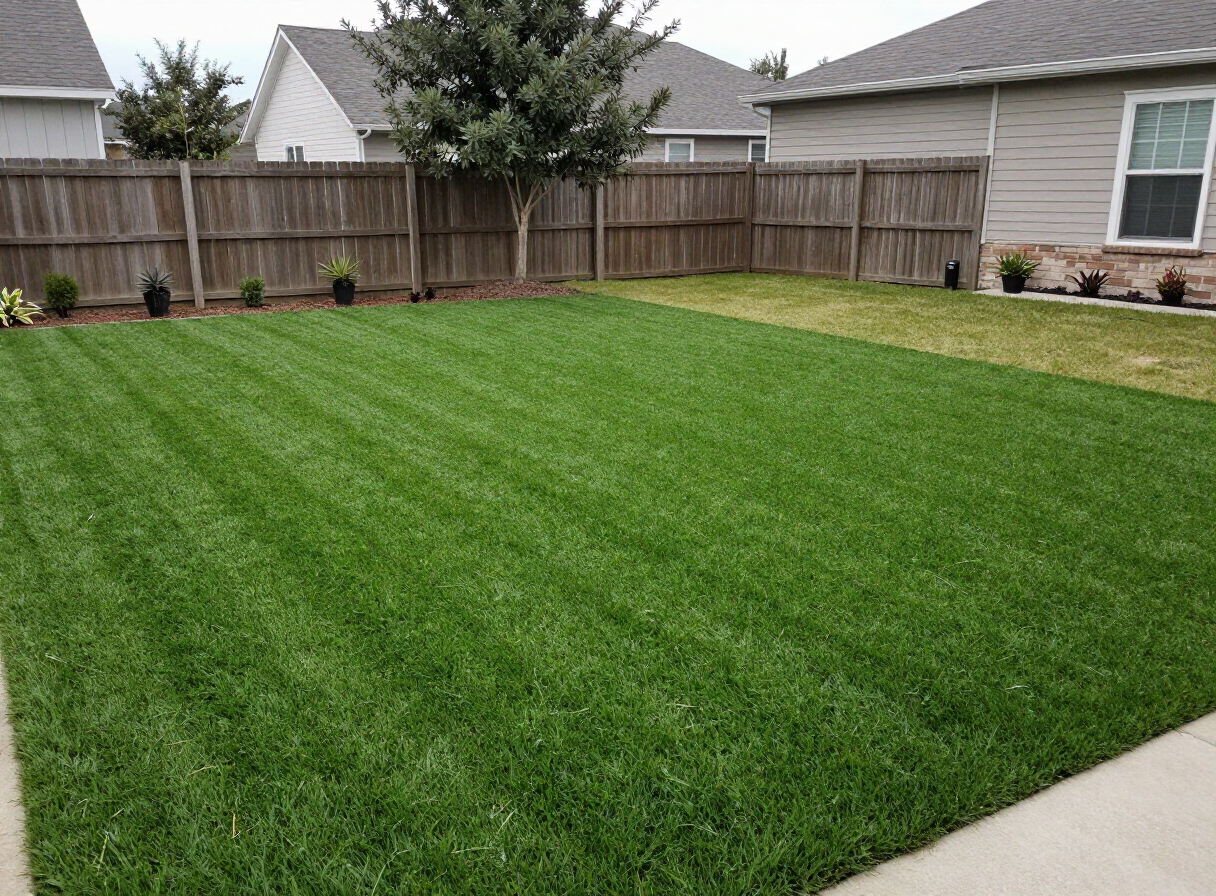 High-rise balcony — Midtown
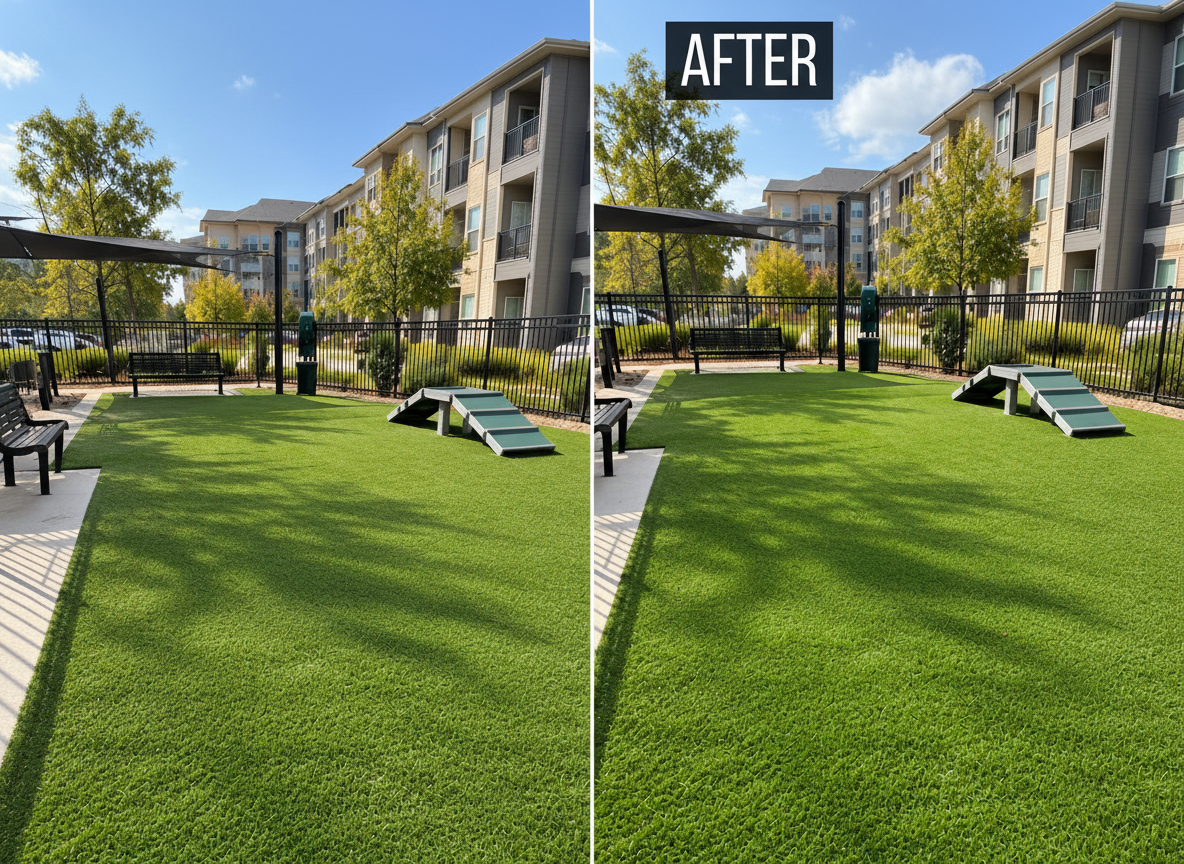 Ivy wall — Downtown
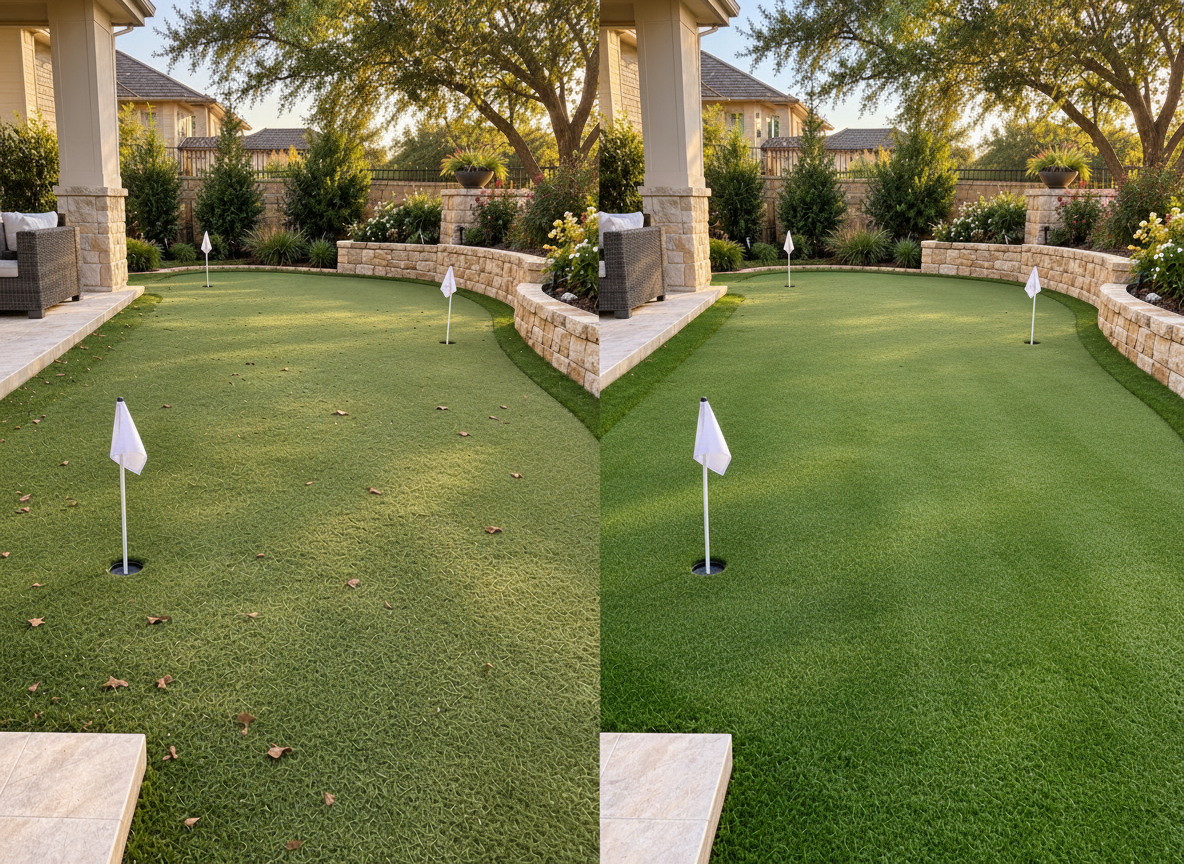 Pet-friendly yard — Bellaire
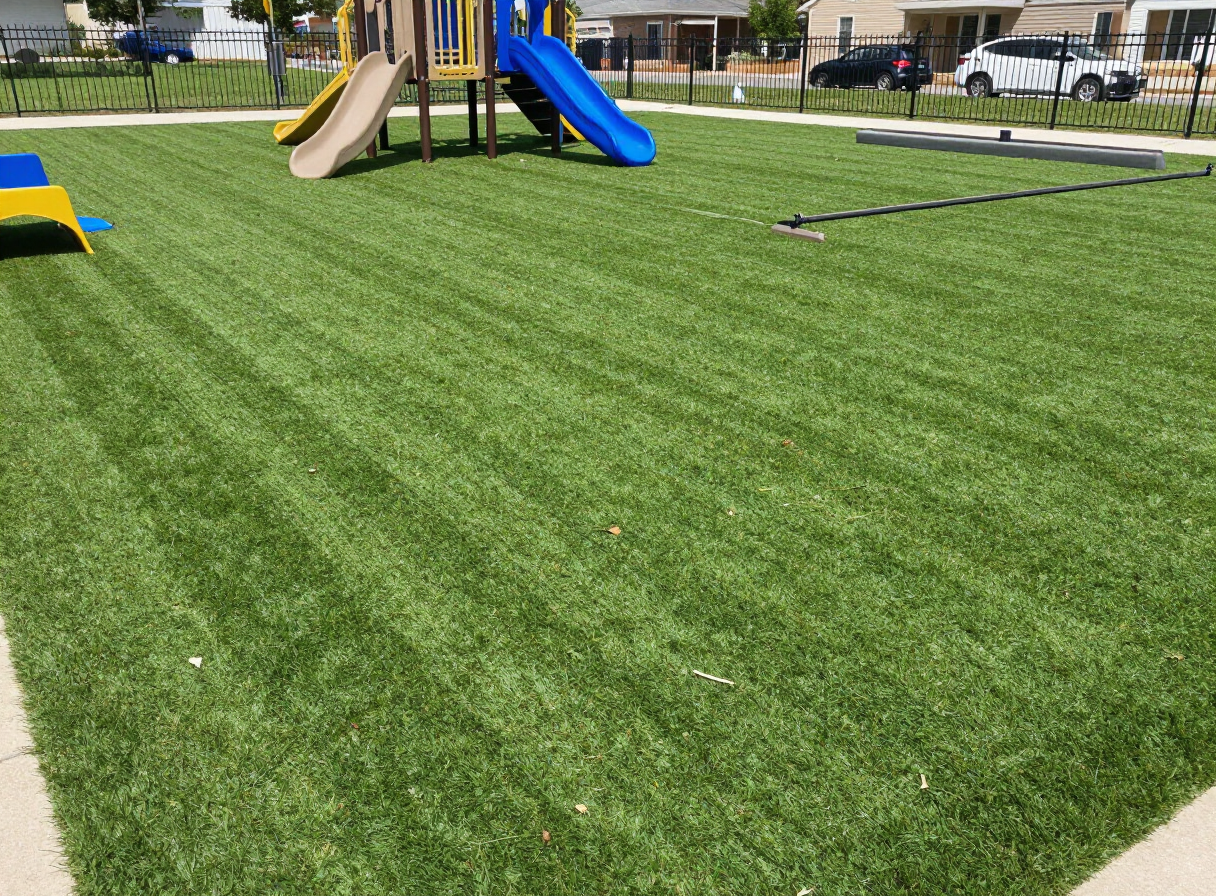 Rooftop lounge — Galleria
Pet Odor Questions
Rinsing dilutes what is on the surface and pushes the rest down into the infill. The residue that causes odor stays in the infill and against the backing, then reactivates in heat and humidity. A hose cannot reach the layer where the smell is actually stored.
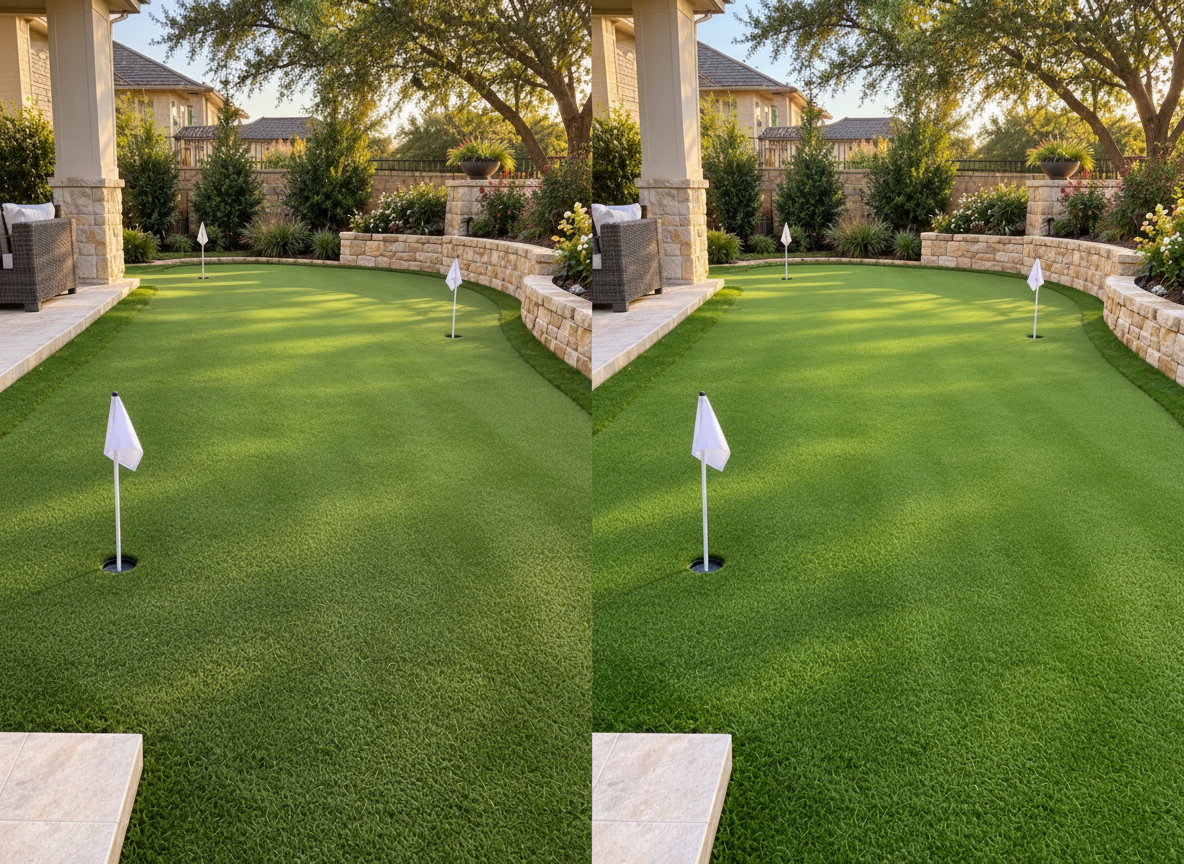
Get the Smell Out of Your Yard
Send photos of the pet area and we will recommend the treatment level and frequency your turf actually needs.