
Program 03 · Turf & Shock Repair
Playground Turf & Shock-System Repair
Seam, edge, base, transition, drainage and localized system correction — with one critical question answered first.
Playground Turf & Shock-System Repair
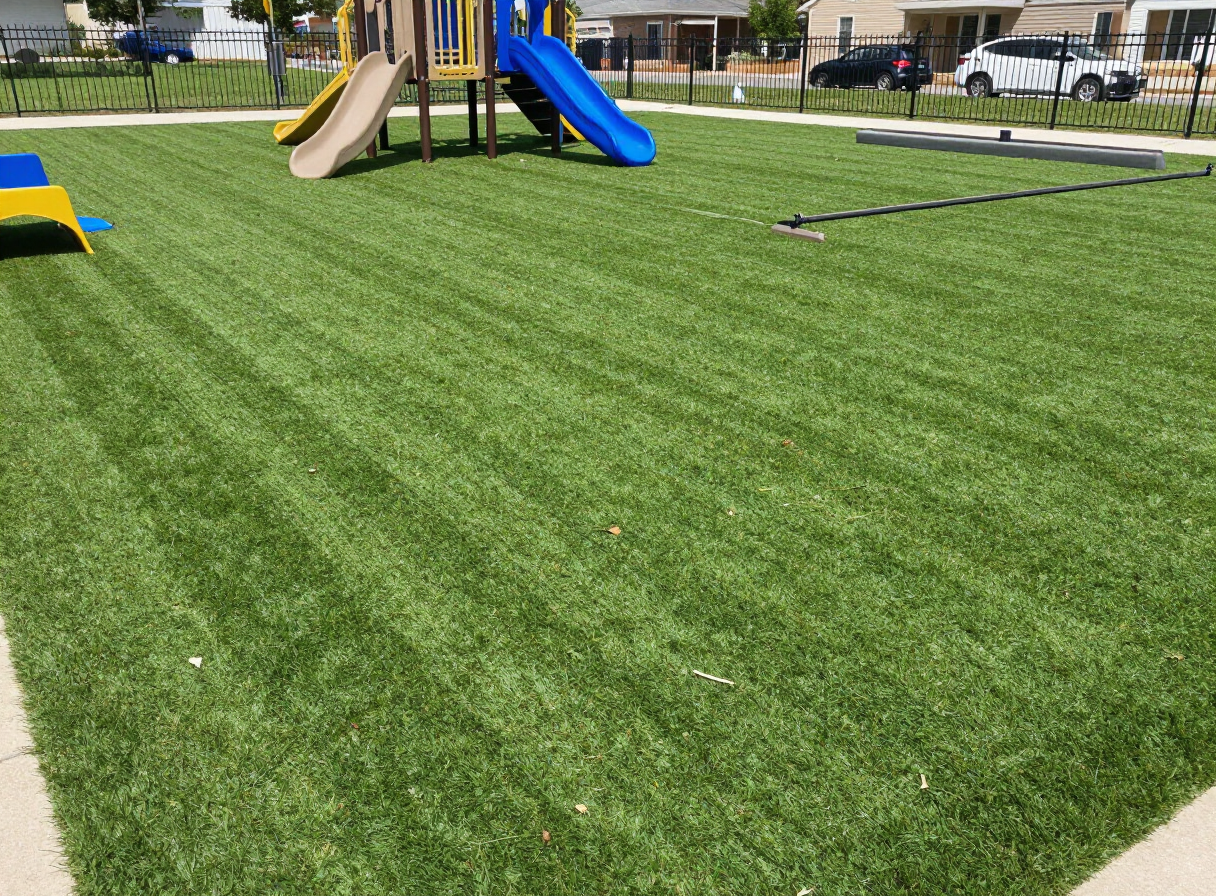
Playground turf repair is different from residential turf repair. Before any playground turf repair, we evaluate one critical question: can the turf be repaired without affecting the fall-protection system beneath it?
If we lift playground turf to correct a low spot, we may be interacting with the engineered shock layer below it. Residential turf repair procedure is not automatically an acceptable playground turf repair procedure.
Repairs are made as inconspicuous as reasonably possible — not invisible. Every repair is photographed and added to the Playground Surface Passport.
- Seam separation and loose edges
- Worn high-traffic turf and exposed backing
- Damaged post cuts, burns and tears
- Wrinkles, settlement and low spots
- Drainage failures
- Turf-to-rubber transition failures
- Displaced or contaminated infill
- Lifted perimeter and pad exposure
- Localized pad damage
- Storm damage
How SynTurf Care Approaches This
A documented, surface-aware process — not a one-size-fits-all cleaning routine.
01
Fall-system evaluation
First answer the critical question: can the turf be repaired without affecting the fall-protection system beneath it?
02
Diagnosis
Identify the cause — base settlement, seam failure, edge movement, drainage, infill or transition issue.
03
Repair plan
Define a repair approach that respects the engineered shock layer, not a generic residential procedure.
04
Repair and document
Perform the repair, photograph before / after, and record it in the Playground Surface Passport.
What This Program Is Designed to Deliver
Every playground program is built around credible, defensible outcomes — maintenance and documentation first, with qualified inspection and impact-testing coordination kept as separate scopes.
- Residential turf repair procedure ≠ automatically acceptable playground turf repair procedure.
- Lifting playground turf may interact with the engineered shock layer below it.
- Repairs are made as inconspicuous as reasonably possible — not invisible.
- Every repair is photographed and added to the surface record.
- Repairs are subject to inspection and turf / backing / base condition before work begins.
- Seam lines and patched areas may remain visible depending on turf age, color and availability of matching material.
- Repair does not certify or restore impact performance — qualified testing is a separate scope.
- Some conditions require replacement rather than repair; we state that honestly before work begins.
- When seams, edges, wrinkles or low spots appear on a playground turf surface
- When drainage is failing or turf is lifting at the perimeter
- When storm or vandalism damage needs correction
- After a condition assessment has confirmed the repair will not compromise the shock system
Playground Turf & Shock-System Repair — Questions
Credible answers about this playground surface program, the maintenance/documentation scope, and what stays a separate qualified scope.
Yes — we maintain and repair playground surfaces regardless of who installed them. Playground repairs are evaluated differently from residential repairs because lifting turf may interact with the engineered shock layer below it.
Related Playground Surface Programs
The complete six-product playground lifecycle — assessment, recurring care, repair, PIP rubber restoration, performance coordination and documentation.
Ready to Put Playground Turf & Shock-System Repair to Work?
Request a site assessment for your daycare, school, HOA or public facility. We will establish the surface system, condition and records baseline.